Bride and Groom

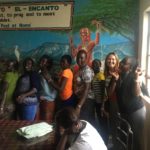
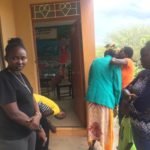
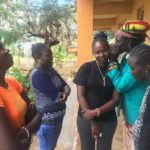
This is Veronica. She is the bride and she is 25 years old. She finished her high school and she went to beauty school, in both cases, with the parish’s support. She has a 2 year old son from a previous boyfriend (father Luis Carlos told me that). Even though she told me that her son’s father was the man she was going to marry, they have only been together for 2 years (at this point I’m not sure). Veronica is currently pregnant with her soon-to-be husband’s child.

Veronica and her husband are modern Samburu. He is an army soldier who comes home every three months. Veronica has her own beauty business. They rent a small bedroom in town. Her plans are to have a small family, just 3 children in total. She mentioned that she would like to have girls because they take care of the mom, while the men do not take care of their mothers (this perception has really changed). Remember, in Samburu culture men are very important. They are the family’s legacy. In a family that has boys, the boys are guaranteed to take care of their parents when they get old. But, lately families have seen daughters as taking care of the parents more that men, so this perception has been changing little by little. This is very important for women. If the society sees them as valuable, they are going to take more care of their women!!!

Veronica met her husband while she was young, and she is in love. This is a big difference between and educated women and one who isn’t. The educated woman can choose her husband, while the uneducated woman is married off to the man the parents choose. Also, the uneducated woman gets married at a much younger age.

One of the problems for the Samburu women are the mother in law. Veronica is lucky because her mother in law likes her. However, some women have told me that they have decided not to get married with a man because the man’s mother does not like them. My idea of this problem is as this culture is focus in men power. The power of a family is in the man: the father or the oldest son. So, when the oldest son gets married and leaves to make his own family, the mother feels unprotected and fights for her son!!

Posted in English | Leave a comment

Nelly, the Widow

Nelly, the lady who took me to the wedding (you will hear about the wedding in another post), is a hard worker. She has a shop in town in which she sells oil, cookies, candies but the main product is miraa. These are leaves that when you chew it produce the effects as an hallucinogen (I tried it but didn’t produce anything in me, maybe I didn’t have enough). You should eat it with peanuts, I have no idea why.

Anyway, Nelly has 4 daughters. She is a widow. In Samburu tradition, if your husband dies you stay a  widow for the rest of life. It doesn’t mean you can’t have a boyfriend, it just means that you can’t get married again. Nelly had her first daughter with her husband. Later he died in an accident and she had a new boyfriend and two more daughters. After, she had another boyfriend and another daughter. The fathers of her daughters help her once in a while with some food but not with school fees or other things. Nelly has to support her daughters by herself. Also, because she can’t get married, the men have all left. To the question of why she had 4 children if she doesn’t have any support from the fathers her answer was “I was looking for a boy” …Really?? if you think this is a special answer, look at this: Nelly has not told any of her daughters who their fathers are. She told me that they might leave looking for their fathers and she would be left alone!!!  So, everyone lives the consequences of their own decisions!!!

In this culture having boys is a blessing… instead girls are not very welcome. It is weird for me, because when your daughter gets married you as a parent receive animals and in some cases money. But in this patriarchal culture being a man is important. A man is the one who receives the inheritance in case the father dies. Also, what the single and widowed women have told me is that when you have a boy in the family people don’t gossip as much as when you just have girls. Now, I can understand Nelly and why she wished to have a boy.

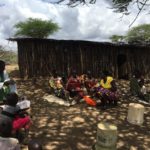
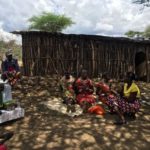
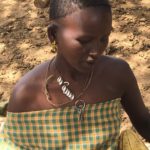
Nelly wore her traditional Samburu necklace for the wedding

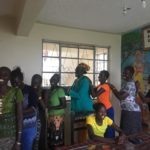
Nelly danced at the wedding!!

Posted in English | Leave a comment

Lolua

Today is my first day in Lodonguoke. My night was ok. At the beginning I couldn’t sleep well because the bathroom has a window but not glass so and I was afraid an animal would get in even if I closed the bathroom door. But, later, I was too tired and fell asleep.

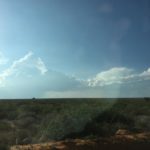
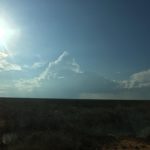
In the morning I went with Serge, a priest from the Ivory Coast and Jeen, one of Lodonguoke leaders to Lolua. Lolua is a small community 1 hour away on foot from Lodonguoke. Yes!! Walking on a hot day and it isn’t an easy road (picture). This is a dessert: the soil is red and it has a lot of up and downs. (picture). For me, it wasn’t an easy walk. Most of the time Serge and Jeen walked ahead so they had to wait for me. Of course, they have more practice. A few times I had to ask for some help getting down small hills.  After this long journey, we finally arrived to Lolua. We had to wait because the women were bringing some water. While waiting, I took Ntua (the puppet) and I played with the children. 

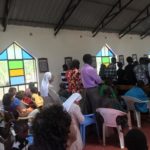
Finally, the 6 women arrived and father Serge celebrate the mass (see video women singing). The topic of the service today was a question: “what happens after we die?” The service was very interactive. The women spoke about the various traditions of burying the dead in the Samburu culture. A man who is married and has children is buried in the lot where the rest of the family lives. In the past, a man who died single was thrown out to the hyenas. But, now his family buries him outside of were they live. For the Samburu, a man who doesn’t have family is not going to be remembered by anybody.

Anyway, going back to the main topic of the service. What happens after death? The women answered that people go back to Nkai (God). The priest emphasized more about the legacy. He invited them to always do the best in all the situations, so they can be remembered for the good actions they did in life. He also reminded them that we can’t bring our possessions with us when we died. This is very important message, because some Samburu men care so much about their animals that even if they or their families have a medical emergency, sometimes they don’t want to sell an animal to pay for medical services. And a family will almost never sell an animal to pay for the education fees of their children. I hope this message stays in their minds. The problem is that there was only one man at the mass. I’m seeing that men are not likely to participate in the services… I hope they can receive the message through the women!! 

After mass I had the opportunity to introduce myself. In my introduction I always tell the group than I am a woman like them, that I have been married for 25 years in a monogamous relationship. I have two children Juan and Valentina. And I have overcome some difficulties and problems like them. I invited them to the workshop I’m going to have next week.

Posted in English | Leave a comment

ILRI

La región Samburo es de las mas atrasadas en toda Kenia. Es por esta razón que hay organizaciones de diferentes países llevando a cabo proyectos en esta zona. Hoy hay una reunión en un salón de la parroquia del proyecto ILRI (www.ilri.org) . International Livestock Research Institute. Es un instituto de investigación que busca que las comunidades pobres puedan participar en el mercado de venta de animales de una manera justa para las partes e investiga para ayudar a mejorar la actividad pastoral. Es importante tener en cuenta que la principal actividad económica de los Samburo son los animales (chivos, vacas y camellos).


Uno de los componentes del proyecto es la nutrición infantil. Hoy le están explicando a las mamás  por que y como van a medir la tasa de desnutrición en niños de 6 meses a 2 años. A través de una cinta que tiene 3 colores rojo, amarillo y verde se le coloca en el brazo al niño y ella va diciendo el estado en que se encuentra. Rojo significa desnutrido, Amarillo significa que esta cerca de estar desnutrido y verde significa que el nivel de nutrición esta bien. A cada mama se le entrega un celular que tiene una aplicación para que le tome fotos al brazo del niño y así pueda reportar los resultados. El proyecto también entrega un dinero en efectivo.

Conjunto con este proyecto, una estudiante universitaria de California esta haciendo encuestas de cómo es la relación entre los diferentes proyectos que hay en la zona: BOMA, ILRI entre otros. Los resultados que ha encontrado es que las señoras (solo es para mujeres) cuando no tienen comida acuden a sus familiares cercanos antes que a las asociadas al proyecto BOMA (ya lo expliqué en otro blog). Pareciera con esto que los grupos del proyecto BOMA son mas para el negocio antes que ser grupos de apoyo.


En mi opinión a estos proyectos  han acostumbrado a la población Samburo a recibir cosas gratis. En Colombia tenemos un dicho “lo que no nos cuesta hagámoslo fiesta”. En la foto muestro como en una celebración que había todas las mujeres que recibieron teléfonos estaban usándolos para tomar fotos. Cuanto les van a durar los teléfonos?. Estoy sintiendo que hay muchas organizaciones y personas queriendo ayudarles a salir de su pobreza pero ellos, los Samburo, sea por la falta de educación o conciencia no están en la misma línea (no todos por supuesto).

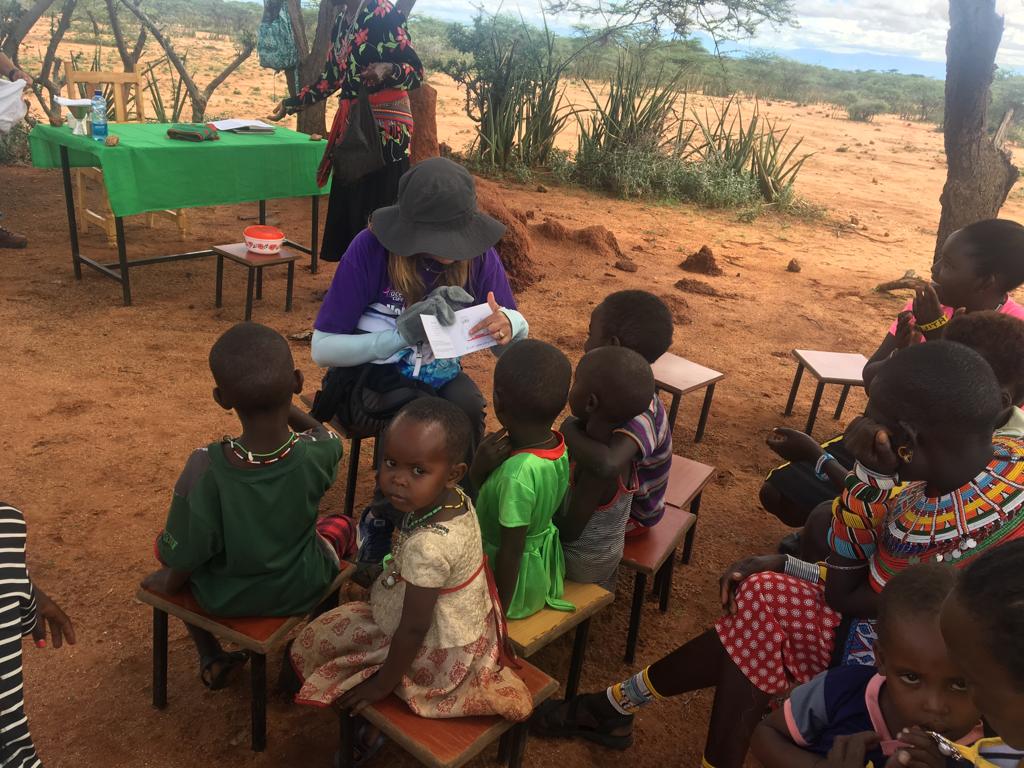
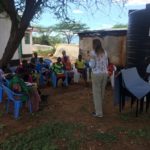
En la tarde fuimos con el padre Luis Carlos a celebrar misa a Lpus. Allí conocí a una líder, Cecilia, fue profesora del la guardería. Es una mujer que es muy alegre y estuvimos cantando y bailando juntas. Aquí en las fotos estoy leyéndoles a los niños y a las mamas mientras esperábamos que el padre comenzara la misa. Luego de la celebración de la misa me presenté y dije algunas palabras a las mujeres y niñ@s que estaban allí.

Posted in Spanish | Leave a comment

Trip to Lodonguoke

Today was a travel day. We woke up in Barsaloi very early in the morning. We left town at 6:20am to Maralal. The trip was 2 hours. Even though it has been raining, the rivers were ok and we were able to cross without any problem.

We arrived at Maralal around 9am. We stopped at the mechanic because there was something wrong with the car’s back door. We also went to the bishop offices (picture). The bishop is the bishop for Maralal and the surrounding region. He is from Italy. The Italian priests were the first one to come to evangelize.

This is the dioceses of Maralal

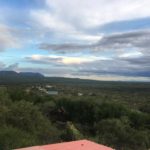
We left from Maralal around 11:30. Lodonguoke, is the new city I’m going to stay 2 weeks. It is not to far from Maralal but the road is really bad (pictures). So, we took around 2 hours to get there.

Lodonguoke is the mission of Father Carlos from Colombia and Serge from Ivory Coast. There is also a seminarist, Sergio from Colombia, here too. Father Carlos is the superior here. He has been a priest for 38 years, and he has served in Africa for 20 years!!! He speaks a perfect Swahili. He loves his community and helps them and supports them, just like a good father with his children!!!

Posted in English | Leave a comment

Tuum Workshop

Today I had a workshop with the women of Tuum. Unfortunately, this is the only workshop I am going to have here :(. In the afternoon we are leaving to Barsaloi to sleep there and tomorrow early in the morning I’m going with Father Carlos and Sergio (a seminarist) to Lodonguoke. 

At the workshop, there were around 15 women. They enjoyed and participated in all the activities. It was curious that when I showed them the various scenes representing the different kinds of violence they face, the women were asking me “how I knew their problems very well” 

Tuum, like other towns in the area, has various problems with violence against women. However, the situation here is a little different than in Barsaloi. In Barsaloi, the women feel supported because they have a woman chief. Instead in Tuum, the women said that the chief doesn’t care about their problems because he is a man. This is a very dangerous situation that I hope changes in the future.

Another big problem in Tuum is the high rates of alcoholism. This is the first time that I have had a women smelling of alcohol. However, she was not drunk and she even participated, contributing with important point of views!!!

After the workshop, the comments to the regional superior were that they enjoyed the activities and learned new things!! So, even if I would have liked more time here, at least the women had the opportunity to reflect on their problems and their possible solutions.

Posted in English | Leave a comment

La Casa en Tuum

En Tuum me quedé en la casa de las hermanas. Allí viven tres hermanas. Pero estaban sólo dos por que una de ellas está en vacaciones de dos meses. Imaginen eso, las hermanas cada tres años tienen solo 2 meses de vacaciones. 

Volviendo a quienes viven allí, está la hermana Cruz o Cruzita, Ella es una monja de 72 años, vivió 20 años de su vida siendo misionera en El Cairo, Egipto pero cerraron la Misión y aunque podría irse a la casa de retiro en Colombia, ella decidió que quiere seguir siendo misionera!!! La otra hermana es la hermana Dora. Ella es una monja de Guatemala. Esta encargada de la guardería (cuida a niños desde los 2 hasta los 5 años). También esta a cargo de la educación para los niños lchakuti (los niños pastores) y la educación para las mamás adultas. Como en Barsaloi, son hermanas que trabajan bastante. Aunque, claro, la hermana Cruzita, por su edad, es más consentida. Las dos mantienen la casa muy bonita y prestan un trabajo comunitario muy importante para Tuum!!!

La Hermana Dora y su nova mascota Rafu

Estas dos hermanas me abrieron las puertas de su casa por los 3 días que me fui a quedar. Estuve muy cómoda en su casa (fotos). Me hubiera encantado estar más. Pero el problema es el transporte para llegar allí. En fin, fueron unas personas muy amables, atentas y cariñosas. 

Tuum tiene una tierra muy fértil. Esto hace que haya una gran variedad de frutas y vegetales. En la chamba (cultivos) de la casa de las hermanas había: Mango, Guanabana, tamarindo, Aguacate, Guayaba, tomates y más. Q delicia!!!

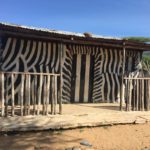
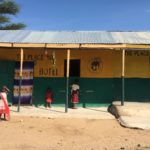
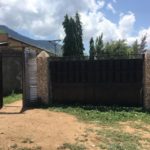
Me fui a acompañar la hermana Dora que está cercando la capilla cerca al pre escolar. De pasada me llevo a recorrer Tuum. Tuum tiene un nacimiento de agua cerca, y debido a esta abundancia de agua esta villa o ciudad pequeña tiene menos mayatas y más construcciones un poco mejores que las mayatas. Aquí hay algunas fotos de una casa, un hotel  y la reja de una casa, que me impacto por su semejanza a una reja de cualquiera de nuestras casas. Según lo que me dijo la hermana, aquí las personas son más comerciantes, vendiendo frutas y vegetales, lo que hace que tengan más poder adquisitivo para tener mejores condiciones de vivienda.

Posted in Spanish | Leave a comment

Inauguration Celebration

I am in Tuum. This is a small city two and a half hours away from Barsaloi. We are here (meaning the priests and I) because they are going to inaugurate the new parish’s house of Tuum. The bishop is the most important guest. 

The celebrations started with a mass. The church was full of people. There was even some Turkana, a rival tribe of the Samburu. Part of the town of Tuum is a “border” between the Samburu and the Turkana, and the parish here work with both tribes. Today, all of them are enjoying the new house with a mass and lunch.

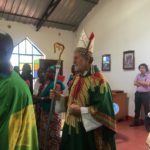
The mass was celebrated by the bishop. The music was very nice. The women wear their best clothes. And today, because of the celebration, there were a lot of men too. The lunch was traditional food: goat, beans, rice and chapati (tortillas). I tried the goat, but I didn’t like it. 

After the mass the priest and the bishop blessed the new house. The group of elders also blessed the house with some leaves and milk. The difference between one and the other was that the Catholic priest blessed the house, and the elders used sacred milk!! Another difference was that in the Catholic way they blessed one time. Instead the group of elders went around three times blessing the house (video).

Anyway, it was a very nice celebration. Later in the evening we had dinner (the sisters, priests and I). Father Jairo congratulated Yadira, the main priest of the Tuum congregation, for making the new house a reality. Father Jairo said “I congratulate you for this house and for not waiting for the perfect time”. I identified with this, because I think sometimes we wait for the perfect time and we postpone actions and decisions for a moment that never comes. The perfect time is now!!!

Posted in English | Leave a comment

Proyecto BOMA

Este fin de semana es la inauguración de la nueva casa de los padres en la misión de Tuum. Región Samburo. Así que en la tarde nos fuimos para allá. El padre Jairo, superior regional, El padre Francisco de Barsaloi y yo. Este fue un viaje de 2 horas y media, aproximadamente. La carretera, como la mayoría, no existen son trochas. Allá van a llegar los diferentes padres de la misión de Barsaloi y Lodonguoke.

En la mañana estuve en la presentación del proyecto BOMA. Este proyecto consiste en: algunas mujeres que el proyecto considera pobres de acuerdo a sus parámetros deben conseguir otras dos compañeras para formar un negocio entre las tres. El proyecto les regala $200 dólares para que inicien su negocio. La mayoría de los negocios es la venta de animales, cabras en especial. Al final de 6 meses si logran duplicar la inversión a $400 dólares les regalan $100 dólares mas. Después de este momento las mujeres se agrupan alrededor de 7 mujeres por grupo para empezar un ahorro individual de $5 dólares mensuales. Este dinero es guardado en cajas con diferentes candados, en Barsaloi lo guardan en la casa de los padres.  La idea es que con este dinero ahorrado se puedan hacer prestamos entre ellas, especialmente para la educación de sus hijos. Es un proyecto con fondos Americanos y esta siendo puesto en practica por el gobierno de Kenia. Los promotores del proyecto capacitan a las mujeres en finanzas, mercadeo y cuentan con un mentor que es de la zona a quien deben reportarle mensualmente los problemas, los gastos, las ganancias.

En mi opinión con la escasez de empleo y la poca educación. Estas son buenas alternativas. Sin embargo, considero que estos proyectos deben ir acompañados del apoyo psicológico para que se trabaje la solidaridad, la autoestima y en fin diferentes temas que empoderen a la mujer empresaria. Aunque los promotores que conocí me afirmaron que también lo tienen. En el manual que me prestaron y en la capacitación que asistí no lo mencionan. Confiemos que lo presenten.

A la pregunta de que retos tiene el proyecto me dijeron que uno de los problemas es que algunos esposos no dejan trabajar a sus esposas. Ante esto, los coordinadores tratan de mostrarle las ventajas del proyecto al esposo. En caso de que el esposo siga presionando la mujer es retirada del proyecto. Los promotores no quieren generar problemas familiares. Al caso de que al grupo de mujeres tengan algún problema y hayan perdido el dinero ya sea por robo de ganado o una mala inversión, se estudia el caso para determinar si se les vuelve a dar dinero para el proyecto o si se retiran del mismo. Este es un proyecto productivo para toda la región Samburo.

Estuve de buenas y el coordinador del proyecto me dejo hablar con el grupo por unos minutos. Acerca de empoderamiento para las nuevas empresarias.

Posted in Spanish | Leave a comment

Mujeres de St. Francis

Acabo de terminar uno de los últimos talleres con el grupo de St Francis. Aunque en realidad el padre Memo invito al coro, que son 3 grupos: St Francis, Maria y Namayata a un día de seminario con almuerzo incluido.  St Francis fue el grupo de mujeres que llego.

Fue un día muy productivo!!! Las mujeres estaban muy receptivas y con ánimos de participar en las actividades lúdicas que componen los talleres. Una de las mujeres antes de ir a almorzar me busco para hablar de sus problemas con la suegra. Esto me recordó que mas allá de ser Samburo son mujeres. Que como cualquiera de nosotras tienen problemas muy comunes. Aunque a diferencia de nosotras, la posibilidad de una consejería profesional no es muy común lo que hace que las mujeres sean muy reservadas.

Estas son algunas de las apreciaciones de las mujeres de Barsaloi por sus comentarios:

  • La mujer Samburu es muy creyente de NKAI o Dios. Esto hace que Nkai sea la solución o la explicación a mucho de los problemas. Ejemplo, como lo dije anteriormente, hay problemas entre clanes. La solución, Rezar. Ellas no se ven como promotoras de paz.
  • En la cultura Samburo no es importante el tiempo. Ningún seminario empezó a tiempo en Barsaloi.
  • Aman sus celebraciones: La lorora (Circuncisión de niños y jóvenes), Los matrimonios, el nacimiento de un nuevo bebe, entre otros.
  • Tienen mucho respeto por la autoridad de los viejos. En caso de violencia domestica la mujer puede quejarse con los viejos y ellos hacen el papel de conciliadores para llegar a una solución.
  • Creen en las maldiciones. Si le pegas a un hombre llegan los demás hombres a pegarte. Pero donde nosotras nos reunamos para defendernos nos cae una maldición. Que tal!!
  • La mujer educada no le gusta que el esposo sea polígamo y están empezando a rebelarse a esta practica. En cambio la mujer no educada es muy sumisa y acepta lo que le toque.

A la pregunta que no les gusta de Barsaloi, contestan:

  • Los matrimonios a una edad temprana.
  • La violencia domestica que sufren
  • El alcoholismo y el tabaco.
  • La guerra entre clanes por ganado.

A la pregunta como solucionar estos problemas:

  • Rezar
  • Educar a los niñ@s para que en un futuro estas practicas de violencia se acaben.
Posted in Spanish | Leave a comment