MABATI AND RARAITY

Today, Basili (one of the catechists) and I went to two nearby communities named Mabati and Raraity. They are located 20 and 30 minutes away from Barsaloi by motorcycle.

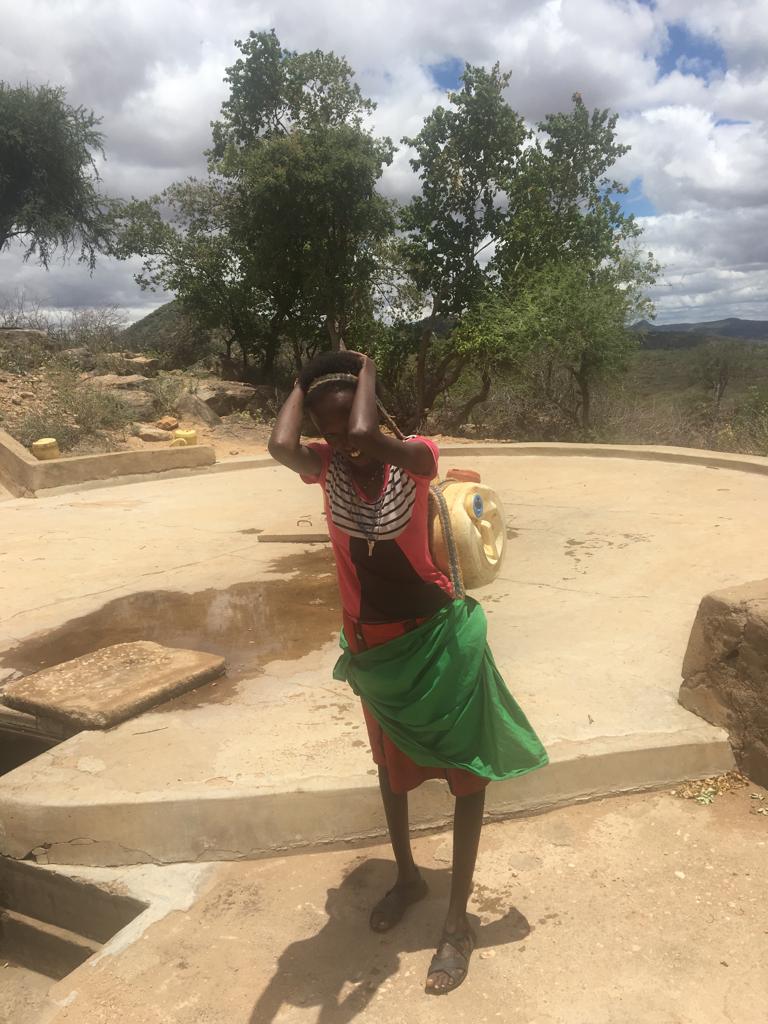
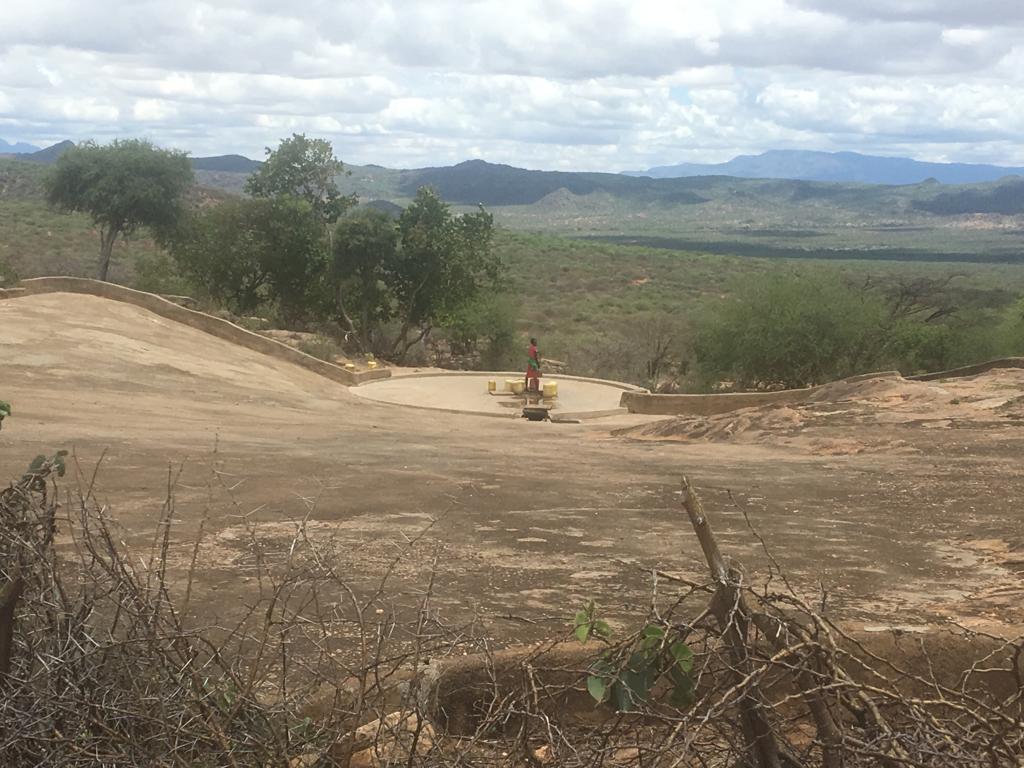
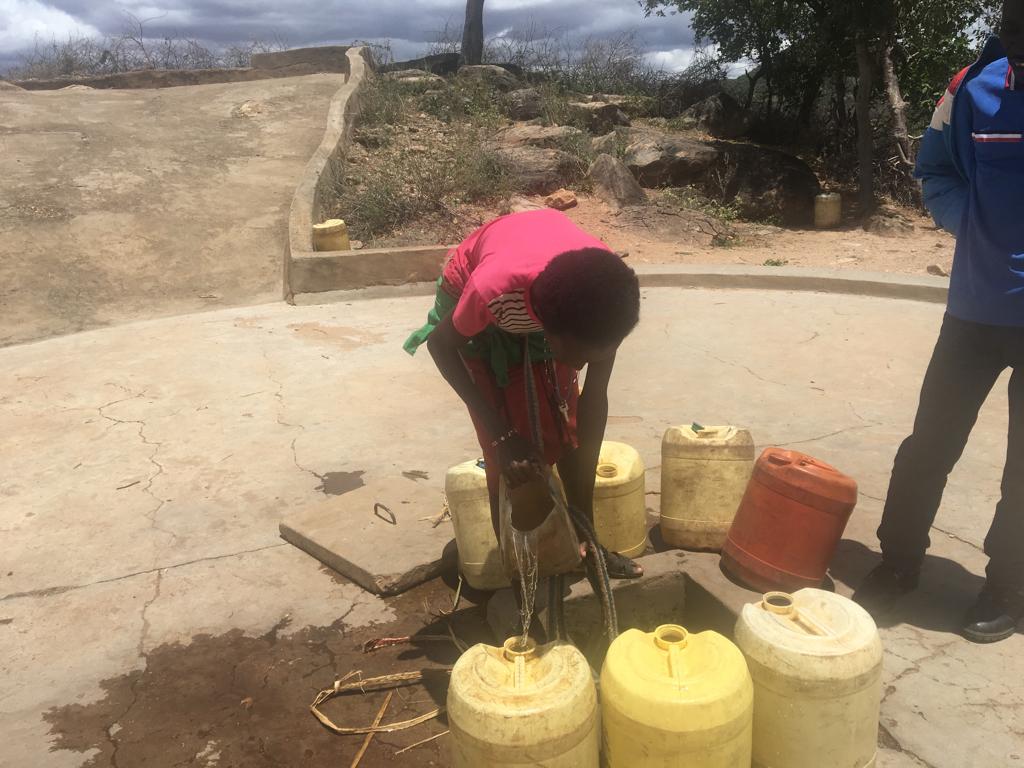
In Mabati, we went to the primary school. The children were still in class so we had the chance to go to the village. On the way to the village we found a woman who was gathering water from an underground rainwater collection well. Last night it rained, which is a blessing in the area, so for this reason there is water at the well. As you can see in the picture, she has 7 water containers with her. That means she is getting water not just for herself, but also for her neighbors. Women are the ones who carry the water… they put it on their back and carry it (See the picture). But they can only carry one container at a time so doing this takes time and effort!! Barsaloi doesn’t have sewage or plumbing. There are just 2 water tanks. One is public and the other is owned by the Yarumal Missionaries. But these just serve Barsaloi and since Mabati is far the people of Mabati have to carry water from this well.
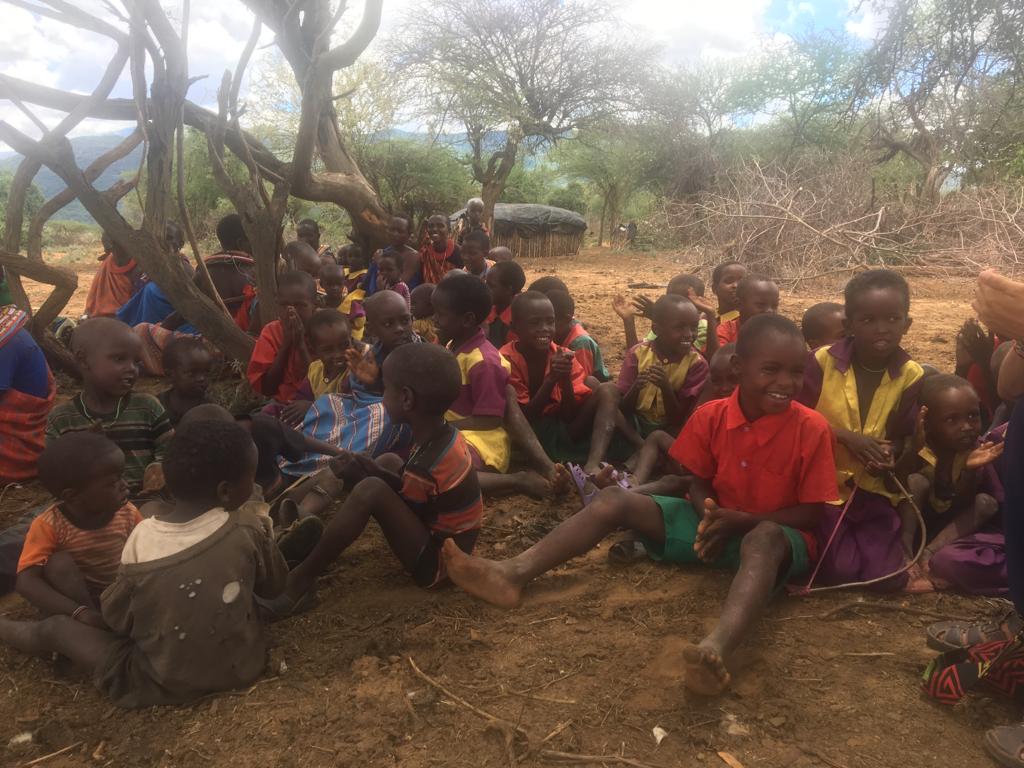
After visiting the village, we went to the school. The kids were already waiting for us. We went to a small room where there were around 10 girls and 30 boys between the ages of 7 and 12. The catechist prayed in Samburu (of course) and he introduced me. I said hello and introduced myself in Samburu “Eserian (Hi) Kaaji nkara Claudia (I’m Claudia)” I had Basili translate my speech about human rights to the children. My purpose is to motivate them to be leaders and advocates for human rights and to remind them that they are the perfect creation of God. After that they sang a song and raised their arms to send me blessings. It was a very emotional moment for me.

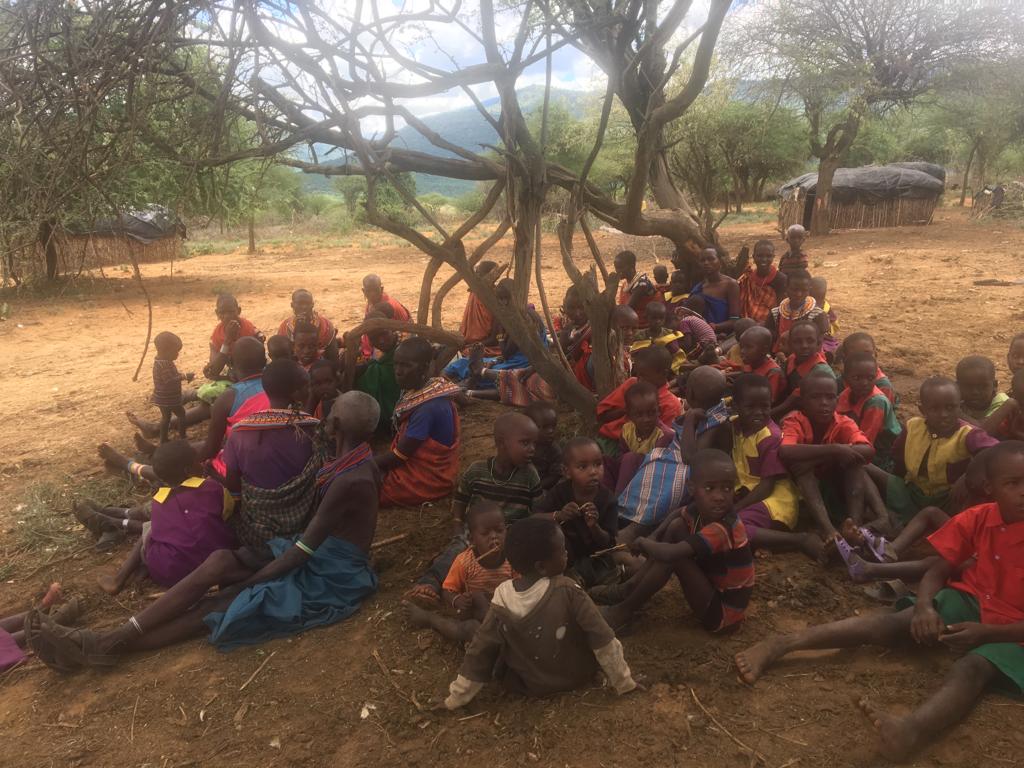
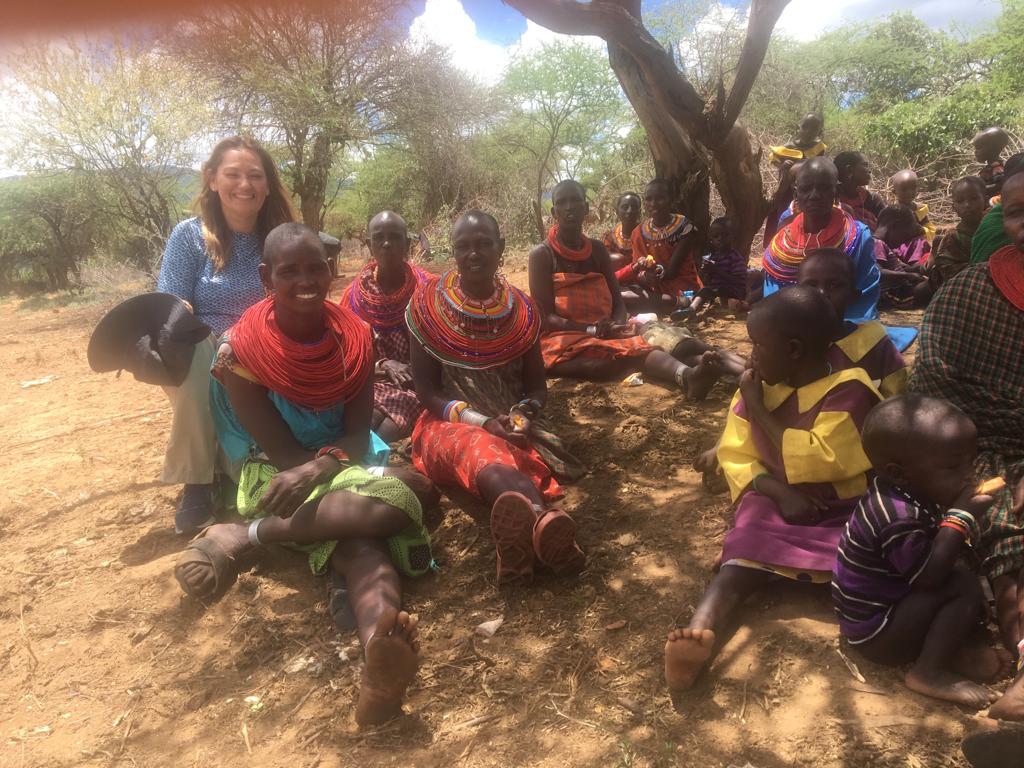
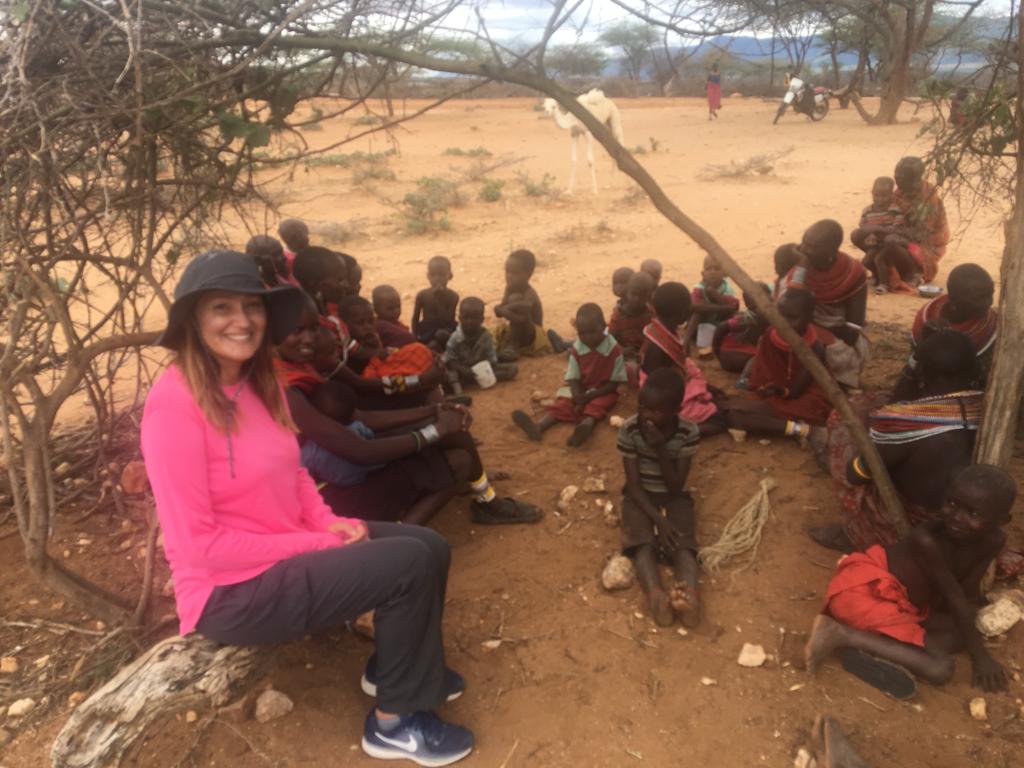
After Mabati, we went to Raraity. The meeting was under a tree (good for me to protect me for the sun). There were 8 women: One was really young (in my opinion around 18) with a boy around 2 years old. The Samburu don’t count the time so they don’t know (and they don’t care) how old they are. Another woman looks old because of the wrinkles on her face. The remaining 6 women were between 30 and 50 years old. As usual with these meetings, there were also a lot of children, probably around 15 of them. This meeting was a little different than my meetings with other communities because there were two men there. They were between 40 to 50 years old. The catechist talked about being grateful all the time (he told me that). I talked about self-esteem. Basili gave them chewing gum, which they really love. After this, we left.
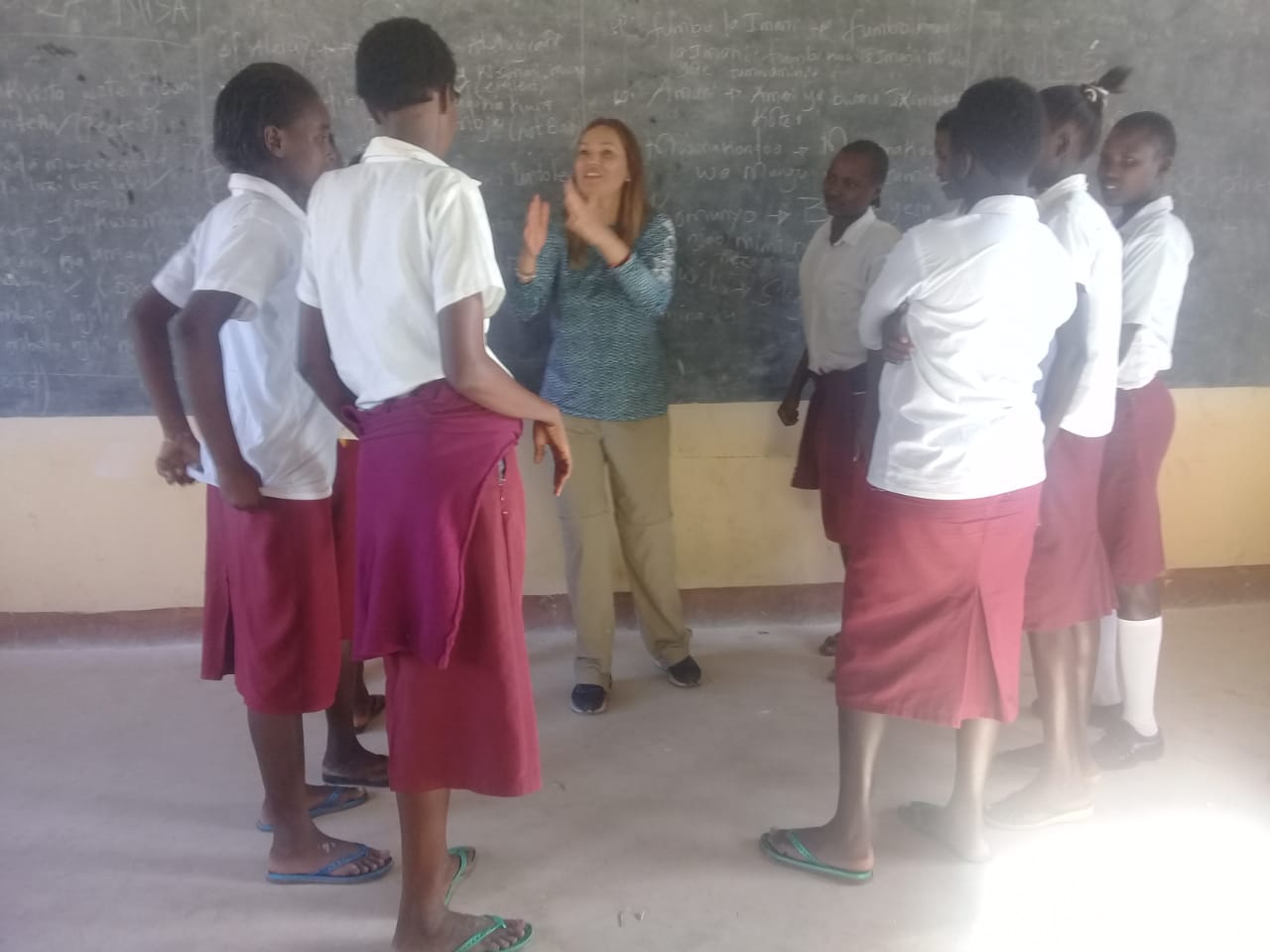
In the afternoon I went to have my 1-hour workshop with the female high school students. Today there were 8 students. Our topic today was leadership. At the beginning they were shy, but little but little they began trusting me and speaking more. At the end of the workshop I had a short meditation with a lavender essence. I think the girls really enjoyed this. After the workshop 5 of them were very kind and offered to walk with me to the mission’s house (first time I ever walked with them. This was a really good opportunity to talk about their dreams. All of them want to keep studying. 2 girls want to be teachers, one wants to become an accountant, another one wants to become a tour guide and 1 wants to be a policewoman. They told me that they are looking for sponsors to keep studying. Does anyone want to help? Leave me a comment to let me know and I will contact you.

I have already been in Barsaloi for ONE WEEK!

Posted in English | Leave a comment

Primera clase con las jóvenes Samburu

Hoy es mi primera clase con las chicas del high school!!. El padre Memo hablo con el rector del único high school que hay en Barsaloi, se acordó que mi charla va a ser Jueves y Viernes de 4 a 5;30. Además voy a tener a las señoritas de los cursos mas avanzados.

Desde la casa de la misión a la escuela fui en moto alrededor de 10 minutos o menos. Steve, el seminarista, me llevo y estuvo en el taller. El primer taller es de presentaciones, de romper el hielo, de poner reglas (entre todas). Hoy estuvieron 9 señoritas. Ellas no saben bien sus edades, puesto ni papa o mama llevan el registro de cuando nacieron. Para mi, ellas están alrededor de los 16 a 19 años. Ellas hablan ingles, esto me facilita puesto que no requiero de traductor, pero no es un ingles muy claro tampoco. Hoy están tímidas y hablan muy bajito lo que hace que se me dificulte entenderles así que les pido que hablen mas duro. Mis talleres son muy lúdicos, es decir a través de juegos aprendemos. Pero por supuesto, después del juego hay reflexiones en las que deben interactuar. Vi que les gusto un juego de competencia se relajaron y divirtieron bastante. Sin embargo 2 chicas, después me entere por el seminarista, que una de ellas es muy seria. Querían “ganar” el juego y no se rieron. Esto fue muy importante para hablar de la importancia de divertirse y el derecho que tenemos al juego y al tiempo libre. Al final de los talleres hago una relajación y les di a escoger entre dos esencias para rosear en el ambiente lavender o Rosas, escogieron rosas. Les pareció extraño las esencias, pero parece que les gusto!! A algunas se les dificulto cerrar los ojos, creo que tienen que tener mas confianza. Hicimos una corta meditación en la que les estoy enseñando a concentrarse en la respiración. Fue muy lindo ver como un grupo de señoritas Samburu se esforzaban por sentir su respiración!! Para mi, así esto sea lo único que les quede vale la pena. Creo que los seres humanos tenemos que aprender a acallar nuestras mentes. Cualquier mecanismos es perfecto: la oración, el rosario, la meditación. Para mi es a través de acallar mi mente que me conecto con mi mas alto ser!!


Posted in Spanish | Leave a comment

Lpusy

Hoy fui a Lpusi, comunidad a 30 minutos de Barsaloi.  Fuimos el catequista Bonifacio, El superior general padre German y un seminarista Steve. Cada semana los padres visitan diferentes comunidades para predicar. Hoy están reunidos aproximadamente 19 mujeres y 50 niños, entre los 2 a los 14 años. Bonifacio, el catequista leyó la palabra de hoy, que trata sobre ser agradecidos, luego presento al  superior y a mi.  Cada uno pudimos decir algunas palabras. Por supuesto el nos traducía en Samburu. Yo hable de lo poderoso que somos los seres humanos con los pensamientos y por ello la importancia de agradecer. Así de esta manera nuestros pensamientos están en todo lo que podemos apreciar en vez de todo lo que nos falta.

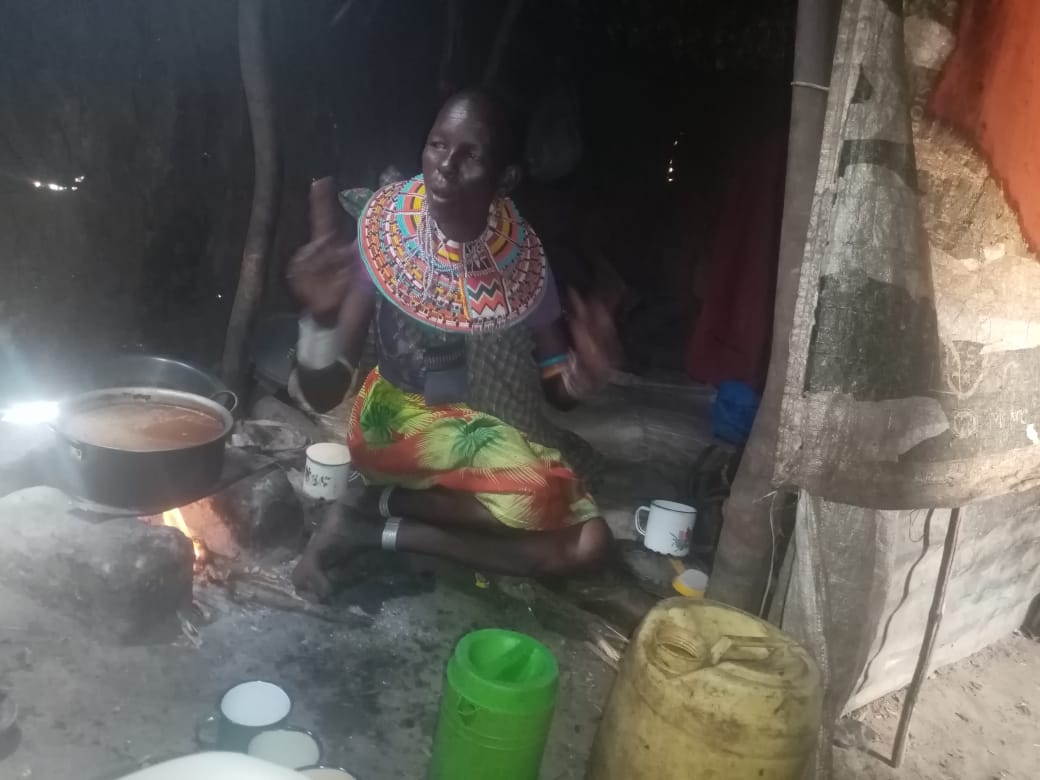
Luego de esta charla nos invito una señora a su Mayata a tomar te. Pude tomar un video de la señora preparando el te, el cual pueden ver aca!! El te es parte de la dieta del desayuno y almuerzo (no puede faltar aunque no se disponga de mas comida) Se toma con grandes cantidades de azúcar y leche.  La leche de cabra se recoge y se conserva en frascos hechos en cerámica, llamados, Mala. Adentro de la Mayata esta un fogón de leña donde se cocina el te. Este fogón dura prendido toda la noche y día pues es lo que calienta la Mayata. Por esta razón el olor a humo es muy fuerte. La Mayata es construida con palos de madera muy bien arreglados y pegados con popo de vacas. Se deja un pequeño orificio cerca al fogón. El techo se cubre con bolsas y/o ropa. Adentro, se divide en tres partes: La entrada, la “cocina” y la zona de dormir que esta cubierto con piel de cabra. Hay de diferentes tamaños, en la que entramos viven 6 personas.  Por lo oscuro, adentro, es muy complicado tomar fotos.

La verdad, me sentí triste cuando entre y me pregunto, Como un ser humano puede vivir en estas condiciones? Claro, este es mi punto de vista o las gafas con que los miro….pero saben? No estoy segura que ellos se sientan pobres. Creo que el ser humano cuando se compara, por que conoce mas realidades, puede sentirse mas o menos que otros. Pero cuando su única realidad es la que vive, como en el caso de los Samburu. Su único diferenciador es tener mas cabras o chivos.  Le hice esta misma pregunta al padre Memo; Los Samburu se consideraran pobres? El cree que no. Mas adelante le preguntare a un Samburu. Pero saben? también le doy gracias a Dios por ver con mis ojos una mayata que no tiene agua, luz pero  es un hogar donde viven seres humanos muy amables y atentos que son las expresiones de Dios en este planeta!!

Posted in Spanish | Leave a comment

My day in Baragoi

Today we were cleaning El Encanto, the priest’s guest house. The 3 ladies who help in the house are Antonella, Pinina and Mery. Because of their context, they are not accustomed to cleaning “Colombian style”… that is very well! Antonella got mad at me because I told her she had to be more thorough. But well, Father Memo supported me and we did a great job !!

After lunch we went to Baragoi to pick up Father German, the superior general of the Missionaries of Yarumal. On the way we saw Dromedaries, a kind of camel but with a single hump (photo). This small village is poor, like everything around here, but there are some stores where we bough potatoes, tomatoes, carrots, bananas for fried plantains, and some brushes to clean the house, I wanted vegetables but on the farm (I’ll tell you about this project) there grow chard (which they call spinach) and some green leaves that I forget the name. I miss all my vegetables 🙁

Returning to the town of Baragoi. In this town, two rival tribes live: the Samburu and the Turkana. Each lives on opposite sides of town. Father Memo told me that there are sometimes clashes in the middle of the town, and from time to time a member of the tribe is killed.  What happens is that it is a tradition to “steal” cattle from the other tribe… it gives the tribe prestige, but for some time now the warriors have exchanged their spears for weapons. This is a problem because now this tradition means there are more dead. Unfortunately I could not take photos (Father Memo said that it is better not to avoid problems).

Today, Father Memo was in a meeting with the warriors. The purpose is to reduce the deaths from “stealing” cattle. Women cannot attend this type of meeting. He did a very interesting exercise with them: He asked them how they imagined themselves 15 years? And some of the answers were: Having 10 dromedaries (remember that cattle gives prestige). Another said having two wives and more than 7 children, but some replied that studying and living in the capital or larger cities, others said than doing business, selling goats or cows. This is a very big change of this generation and is taking place little by little from a generation ago.

I am happy!! Father German brought some fruit from Tum, another nearby mission. They say (I have not gone yet) that it is a very fertile land. He brought lemons, soursop (I love soursop) and guavas !! What a treat! Father Memo says that we are being very blessed because the mission has an abundance of fruits, how lucky am I!


Posted in English | Leave a comment

Baragoi

Hoy en la mañana estuvimos limpiando el encanto. Esta es la casa de huéspedes de los padres. Las chicas que ayudan en la casa son 3 señoras: Antonella, Pinina and Mery. Ellas por su contexto no están acostumbradas a limpiar, estilo colombiano, es decir muy bien!! Antonella se puso brava conmigo. Pero bueno, el padre Memo me apoyo e hicimos un super trabajo!!

Después del almuerzo fuimos a Baragoi a recoger al padre German, el superior general de los Misioneros de Yarumal. Por el camino vimos Dromedarios, una especie de camello pero con una sola joroba (foto). Este pequeño caserío es pobre, como todo por aquí, pero hay algunas tiendas donde compramos papas, tomates, zanahoria, plátanos para fritar, cepillos de aseo, quería verduras pero en la granja (después les contare como es este proyecto) hay acelgas (q la llaman espinaca) y unas hojas verdes que olvide el nombre. Me hacen falta las verduras : (. Volviendo al pueblo de Baragoi. En este lugar viven las dos tribus rivales los Samburu y los Turkana. Cada una vive en un extremo. El padre Memo me decía que algunas veces en la mitad de las dos hay enfrentamientos con muertos. Lo que pasa es que es una tradición “robar” ganado a la otra tribu, da prestigio. Pero desde hace un tiempo para acá los guerreros cambiaron las lanzas por las armas. Esto es un problema por cuanto hay mas muertos. Lamentablemente no pude tomar fotos (padre Memo dijo que mejor no para evitar problemas).

Hoy en la mañana padre Memo estuvo en una reunión con los guerreros. El propósito es disminuir la muerte de ellos por “robo” de ganado. Las mujeres no podemos asistir a este tipo de reuniones. El hizo un ejercicio muy interesante con ellos, les pregunto como se imaginaban en 15 años? Y algunas de sus respuestas fueron: Teniendo 10 dromedarios (camellos), recuerden que el ganado da prestigio, Otro dijo que teniendo dos esposas y mas de 7 hijos, pero algunos contestaron que estudiando y viviendo en la capital o ciudades mas grandes, otros dijeron que haciendo negocios, vendiendo cabras y chivos. Esto es un cambio muy grande de esta generación y va dándose poco a poco desde una generación atrás.


Estoy feliz!! El padre German trajo frutas de la otra misión, se llama Tum. Dicen (no he ido aun) que es una tierra muy fértil. El trajo limones, guanábanas (amo la guanábana) y guayabas!! Que delicia. El padre Memo dice que estamos siendo muy bendecidos por que hay muchas frutas, que de buenas que soy!!


Posted in Spanish | Leave a comment

Meeting with the Boss

Today was a very interesting day. I had my meeting with the head priest of the congregation in Barsaloi. Father Guillermo (Memo) and the two seminarists Jorge and Steve (both Colombians). The objective of the meeting was the presentation of my Project called EMPOWERING THE SAMBURU WOMAN. At the beginning, Father Memo corrected some parts of the context, like that now it is more common for women go to school and that not all women are forced to marry and some ask to be married because in the Samburu tradition having family and children is very important for both men and women. This is true, although I disagreed that they themselves ask to marry because they wantto be married, because since they don’t have an education there really is nothing else for them to do. Father Memo also said that some women want their husbands to hit them because it is a way to show that they have command over the woman (wow I really have a hard time believing that, but I don’t know). The other clarification that he made is that now the Samburus are less polygamic: most men have gone from having 3 or more wives to only two of them (wow that good!) because now they are more conscious about how many women they can support. Little by little, love marriages are being respected. In this Samburu tradition, parents are the ones that look for a husband for their daughters, who in most cases are young women without education. The man must pay a dowry for her (usually goats) and the marriage is celebrated by sacrificing a bull. If the man does not have money, he must earn some before he can marry.


After all the clarifications of the context I presented the topics to be discussed in my workshops, among them leadership, violence and 5 other topics of importance. Father Memo liked my project very much and assigned me different groups to work with, from school girls to adult women. I will also be working on some financial concepts for a productive project that the women of the community have. What a joy!! I see how my purpose of empowering women is being carried out!!


After all this I was with a beautiful baby, a young girl called Satila. Women carry their babies on their backs all the time, but Satila’s mom let me carry her for a short time. How cute right? The language here is Samburu and those who go to school speak English. Satila’s mother speaks English so I was able to ask her to let me carry her. In Kenya, whites call us musungos and some children are scared of white people. In one of the Mayatas I went to, a 2-year-old girl was so scared that she did not stop crying until I left. But most of them take you by the hand and want to be with you all the time.

Posted in English | Leave a comment

Reunion con el jefe!!

Hoy fue un día muy interesante. Tuve mi reunión con el padre de la congregación en Barsaloi. El Padre Guillermo (Memo) y los dos seminaristas Jorge y Steve (Colombianos). El objetivo de la reunión era la presentación del Proyecto llamado EMPODERAMIENTO A LA MUJER SAMBURU. Al principio el padre Memo me corrigió algunas partes del contexto como por ejemplo q ahora van mujeres a la escuela, que no todas las mujeres son forzadas a casarse ellas mismas piden ser casadas por que en la tradición Samburu tener familia e hijos, es muy importante tanto por hombres como por mujeres. Esto es cierto, aunque difiero un poco en que ellas mismas pidan casarse por que lo deseen para mi es por que para ellas al no tener educación no hay nada mas que hacer. Otra cosa que dijo el padre, es que algunas mujeres buscan que sus maridos les peguen por que es la forma de demostrar que tiene derecho sobre la mujer (wow la verdad me cuesta creerlo, pero no se). La otra aclaración que me hizo es que ahora ya la poligamia es menor (de 3 a mas esposas pasaron a dos, wow que bien!!) por que ahora piensan mas en las que puedan mantener. Poco a poco el matrimonio por amor esta siendo respetado. En esta tradición Samburu, los padres buscan el marido a la mujer, que en la mayoría de los casos son mujeres jóvenes sin educación. El hombre debe pagar una dote por ella, en la mayoría de los casos son cabras y el matrimonio se celebra sacrificando un toro. Si el hombre no tiene plata debe buscarla de alguna manera para casarse.


Después de todas las aclaraciones del contexto le presente los tópicos a tratar, entre ellos están Liderazgo, violencia y otros 5 mas. El padre le gusto mucho el Proyecto y me asigno diferentes grupos para trabajar, desde niñas de colegio hasta mujeres adultas. De otra parte voy a trabajar algunos conceptos financieros para un Proyecto productivo que ellas tienen. Que alegría!! Veo como se esta llevando a cabo mi propósito de empoderar a las mujeres!!


Después de todo esto estuve con una hermosa beba, aquí les mando su foto, se llama Satila. Las mujeres cargan a sus bebes en la espalda todo el tiempo. Pero por excepción me la dejo cargar. que linda cierto? El idioma aquí es el Samburu y los que van a la escuela hablan ingles. La mama de Satila habla ingles por eso me la dejo cargar hehe. En Kenia los blancos nos llaman musungos y algunos niños se asustan con uno. En una de las Mayatas una niña de 2 anos aproximadamente se asusto tanto que hasta que no me fui no paro de llorar. Pero la mayoría de ellos te cogen de la mano y quieren estar contigo todo el tiempo.


Posted in Spanish | Leave a comment

Context – Who are the Samburu?

The Samburu tribe occupies extensive arid lands in the north of Kenya. They are related to the Maasai tribes of southern Kenya and northern Tanzania. They are a seminomadic tribe and their primary economic activity revolves around the growth and sale of cattle, sheep and goats. Samburu society is gerontocratic, meaning that the tribe’s power lies in the elderly, and they are the ones that arrange marriages, mediate conflict and take all important decisions that affect the community.


Samburu culture is strictly patriarchal. Every fifteen years, the tribe perform a mass circumcision of its male members between the ages of 8 and 25 years old. Five years after being circumcised, male members are allowed to marry. Cultural traditions force Samburu women to undergo female genital mutilation (FGM) and Samburu women are married off to other members of the tribe starting at a very young age. The Samburu are a polygamic culture, and it is common that the young women married off to older men are usually that man’s second or third wife.


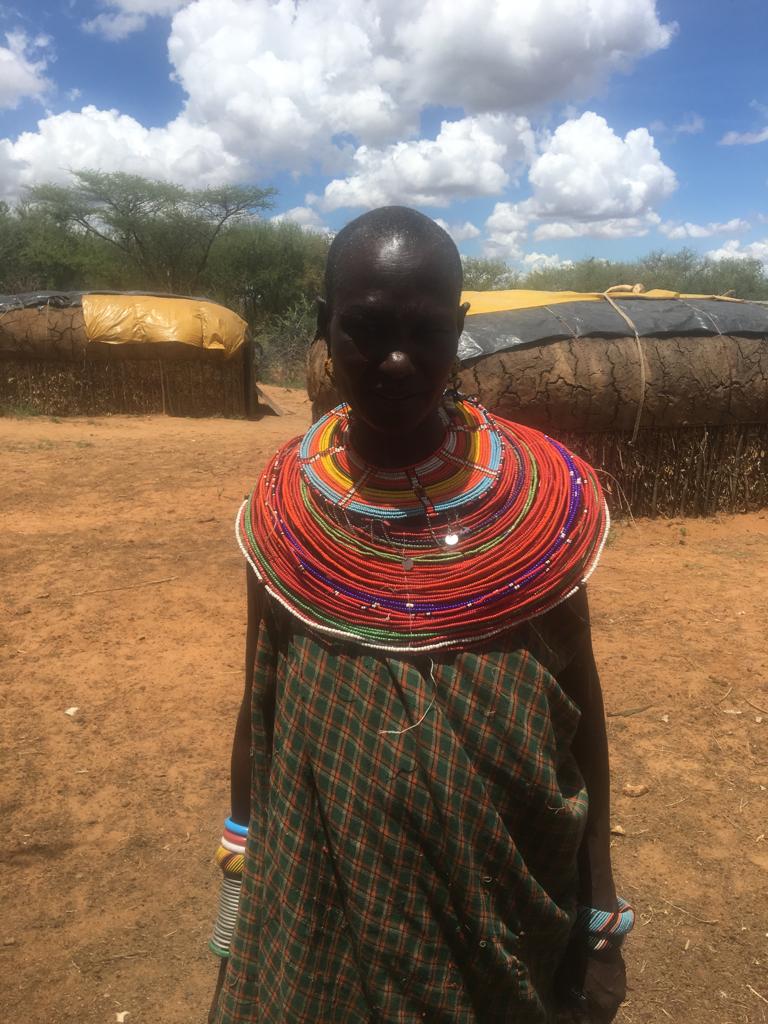
The Samburu woman is humble and strong. They are responsible for coordinating grazing (which is done by children chosen by the family), domestic work, construction of houses — nkaji or manyatta — and water collection, among others responsibilities. A majority of the women do not go to school, and education is usually reserved for men. However, not all of the children of a family go to school are only some are chosen to get an education, depending on the resources and desires of the family.


The Samburu culture is a culture where the opinion of women does not matter. A Samburu woman tends to have no say over her life or body, and she can be punished with physical violence for any reason. Additionally, the children belong to the man. In the event that the woman decides to leave the husband for abuse (and the laws are starting to support women who are abused) she loses rights over her children and they are left to the abusive husband. Because of the polygamic structure of most Samburu families, a patriarch shares a nkaji with all his wives, which often produces confrontation among the women of the house. This is a serious psycho-social problem.


This situation of the Samburu woman — genital mutilation, many responsibilities of pastoral and domestic work, denial of education and physical violence in some cases — is clearly an abuse of her human rights hidden behind traditions that are accepted by both the men and women of the tribe. This situation demands action by both the national government and the international community. At the local level, actions aimed at empowering women through education are incredibly important because it is only by educating women that they can begin to discern what is desirable and what is not desirable. For all these reasons, I decided to come to Kenya, where the Samburu tribe lives. I believe that in the 21st century we all have a duty to give our time and talents to contribute to the well-being of other human beings. By educating others on their rights, we can become a seed that brings about immense change.

Posted in English | Leave a comment

Quienes son los Samburus

Los Samburus ocupan una árida área del norte de Kenia – Africa. Ellos están relacionados con los Massai. Son seminomadas y su principal actividad económica es el pastoreo de ganado vacuno, ovejas y cabras. Los Samburus son gerontocraticos que quiere decir el poder esta en los viejos, son ellos quienes arreglan matrimonios, resuelven los conflictos del clan, en fin, toman todas las decisiones que afectan a la comunidad.

La cultura Samburu es patriarcal. Cada quince anos los hombres tienen la circuncisión. Las edades para esta practica van aproximadamente desde los 8 anos hasta los 25. Después de 5 anos de circuncidados pueden casarse. Las mujeres samburus son culturalmente forzadas a realizarse la mutilación genital y son casadas a edades muy tempranas. Los Samburus son polígamos. Es muy común que la mujer joven sea casada con un hombre viejo como segunda o tercera esposa.

La mujer Samuro es humilde y fuerte. Ellas son las encargadas de coordinar el pastoreo (Que lo realizan los niñ@s que la familia escoge para esta labor), las labores domesticas, la construcción de las casas – nkaji or manyatta- y la recolección de agua, entre otras. Las mujeres, en un porcentaje mayor, no van a la escuela, la educación es especialmente para los hombres (Pero tampoco todos los niños de una familia van a la escuela son solo algunos escogidos y depende de los recursos y deseos de la familia). Es una cultura donde la opinión de la mujer no importa, ella no decide sobre su propia vida ni cuerpo y puede ser castigada con violencia física por cualquier motivo. Adicionalmente, los hijos le pertenecen al hombre. En caso de que la mujer decida dejar al esposo por maltrato (Las leyes están empezando a apoyar a la mujer) pierde derecho sobre sus hijos y se los tiene que dejar al esposo maltratador. Por ser polígamos en un nkang vive el patriarca y sus esposas. Esto produce enfrentamiento entre las mujeres y es un problema  psyco-social que esta viviendo estas tribus.

Mayatta

Esta situación de la mujer Samburu: la mutilación genital, la sobrecarga de labores de pastoreo y domesticas, la negación a la educación y la violencia física en algunos casos, es claramente un abuso de sus derechos humanos que se esconde bajo tradiciones que son aceptadas tanto por hombres como por las mismas mujeres Samburu. Situación que demanda acciones de gobierno tanto nacional como internacional y a nivel local acciones que deben ir encaminadas a empoderar a la mujer a través de la educación pues es solo a través de la educación que se puede distinguir lo que no se desea.  Por todas estas razones es que decidí venir a Kenia, donde la tribu Samburu vive, pues considero que en pleno siglo XXI todos tenemos el deber de dar de nuestros talentos y tiempo para aportar a que otros seres humanos conozcan sus derechos y así ser una semilla para provocar un cambio.


Posted in Spanish | Leave a comment

Sunday in Barsaloi

Today we had mass, of course, it is Sunday! Thankfully it wasn’t as early as yesterday… today it was at 10 AM. Thank you God!

The mass here is a beautiful celebration. The music is very rhythmic and catchy. The women are very well dressed. Some of them wear traditional Samburu dresses. Some men were also wearing traditional shirts and something similar to a skirt, not too long just up to the knees. Others were simply wearing western clothes: shirts or blouses and pants. The population that attends mass is 60% children, 25% women and 15% men. 

For me, their mass is like a party. The people are dressed in their best outfits, they sing, dance and through this celebration they break the routine of the week.

Unfortunately I couldn’t understand anything because the mass was only in Samburu. What a shame that language divides us… The only problem (for me) was that mass was too long. It was almost 1 hour and 30 minutes, in the heat and with no AC….I have been missing the AC.


Posted in English | Leave a comment